In this chapter we will examine New Testament references to Sheol (Hades) other than Jesus’ Parable of The Rich Man and Lazarus, which we addressed in the previous chapter. We’ll look at direct and indirect references to Hades and also every passage that people cite to argue Sheol is a state of conscious existence for human souls.
“The Gates of Hades will Not Overcome It”
Let’s start with an interesting statement Jesus made in response to Peter’s confession that Jesus was “the Christ, the Son of the living God”:
Jesus replied, “Blessed are you, Simon son of Jonah, for this was not revealed to you by man, but by my Father in heaven. (18) And I tell you that you are Peter, and on this rock I will build my church, and the gates of Hades will not overcome it.
What is the “rock” on which Jesus said he would build his church in verse 18? It’s not Peter whose name in Greek, petros, means “stone.” The “rock” on which Jesus would build his church is petra, meaning “large rock” or “bedrock.” When you’re driving on an interstate highway and pass through a section with sheer rock cliffs on either side it’s obvious that the road-workers blasted through a big hill or mountain. When I see this I often marvel at the solid mass of rock underlying the topsoil. This is petra or bedrock. Jesus said his church would be built on such bedrock, figuratively speaking – an incredible mass of solid rock. What is this “rock”? It’s the revelation – the fact – that Jesus is the Christ or Messiah, the Son of the Living God, who died for humanity’s sins and was raised to life for our justification, disarming all diabolic powers and authorities. This is the gospel or “good news.” Jesus’ church is built on this incredibly good news. It is through this gospel that people escape bondage from the kingdom of darkness and become part of God’s kingdom (Colossians 1:13).
Why did Jesus emphasize Peter’s name, petros? Because, although Peter was a little “stone,” he would become a part of the bedrock of the church of Jesus Christ, as are all believers. We’re all little “stones” that together make up the bedrock of the church, Christ’s body on earth!
Jesus adds in verse 18 that the “gates of Hades” would not overcome his church. The “gates of Hades” was a colloquial Jewish phrase for death, which makes sense since Hades (or Sheol in Hebrew) is the realm of the dead and consequently a person would have to physically die to go there. In other words, physical death was the “gate” to enter Hades. With the understanding that the “gates of Hades” refers to death, Jesus was saying that even death, Satan’s ultimate weapon (Hebrews 2:14-15), couldn’t stop the Messiah from birthing and unleashing his church. And it didn’t. He was raised to life and the rest is history. Furthermore, death has no power to destroy the church, period. Every Satanic attempt to wipe out believers and stop the church’s spread has failed. In fact, the blood of martyrs has always served to advance God’s kingdom rather than diminish it; for example, Stephan from Acts 7:59-8:4.
Peter’s Reaction to the Prospect of Jesus Dying and Going to Sheol
An interesting insight on the nature of Sheol can be observed from Peter’s response to Jesus’ declaration that he was going to be crucified and rise again three days later:
From that time on Jesus began to explain to his disciples that he must go to Jerusalem and suffer many things at the hands of the elders, the chief priests and the teachers of the law, and that he must be killed and on the third day be raised to life.
(22) Peter took him aside and began to rebuke him. “Never, Lord!” he said. “This shall never happen to you!”
(23) Jesus turned and said to Peter, “Get behind me, Satan! You are a stumbling block to me; you do not have in mind the concerns of God, but merely human concerns.”
Notice that Jesus doesn’t tell his disciples that he will be physically killed and live in a conscious state in Sheol for three days and then be raised to physical life. No, he plainly informs them that he will be killed and only raised to life three days later. This is in harmony with the notion that Sheol is the graveyard of souls where dead souls are housed until their resurrection. It doesn’t support the idea that souls are conscious and either fellowshipping with father Abraham in paradise or suffering constant roasting torment.
This, in turn, is verified by Peter’s response where he literally rebukes the Messiah: “Never, Lord!” Why would Peter have such a negative reaction to Jesus’ crucifixion if it resulted in him going to paradise for three days to chum with Abraham? This is just further testimony to the fact that Jesus’ Parable of the Rich Man and Lazarus is a fantastical tale given to rebuke the Pharisees and proclaim the main theme of the New Testament and not a literal accounting of the nature of Sheol.
Jesus’ Transfiguration and the Appearance of Moses & Elijah
The “transfiguration” refers to the occasion where Jesus took Peter, James and John up a high mountain whereupon the Lord was gloriously transfigured before them. Moses and Elijah then appeared and talked to Jesus. Let’s read the passage:
Six days later Jesus took with Him Peter and James and John his brother, and led them up on a high mountain by themselves. 2 And He was transfigured before them; and His face shone like the sun, and His garments became as white as light. 3 And behold, Moses and Elijah appeared to them, talking with Him. 4 Peter said to Jesus, “Lord, it is good for us to be here; if You wish, I will make three tabernacles here, one for You, and one for Moses, and one for Elijah.” 5 While he was still speaking, a bright cloud overshadowed them, and behold, a voice out of the cloud said, “This is My beloved Son, with whom I am well-pleased; listen to Him!” 6 When the disciples heard this, they fell face down to the ground and were terrified. 7 And Jesus came to them and touched them and said, “Get up, and do not be afraid.” 8 And lifting up their eyes, they saw no one except Jesus Himself alone.
9 As they were coming down from the mountain, Jesus commanded them, saying, “Tell the vision to no one until the Son of Man has risen from the dead.”
Matthew 17:1-9 (NRSV)
Did Moses and Elijah actually appear to Jesus on the mountain and talk to him? If so, how was this possible? There are two general explanations:
1. After his spectacular transfiguration, Jesus said to his disciples, “Tell the vision to no man” (Matthew 17:9). The Lord referred to what they saw as a vision. A vision is not a material reality, but a supernatural picture seen in the mind or eyes. This same Greek word for “vision” was used in reference to Peter’s vision of the unclean beasts being made clean (Acts 10:3,17,19 &11:5). This leads to the possibility that Elijah and Moses were not real but a supernatural picture. If this was the case, the transfiguration was perhaps a prophetic vision of that which would take place in the distant future. Peter, James and John saw the Son of Man glorified in the Kingdom and communing with Moses & Elijah in this vision.
Although this is a plausible explanation since Jesus himself specifically called it a vision, it’s weak in that Jesus was seen talking to Moses and Elijah. If these two figures were, in fact, a vision why would Jesus – who is real in this situation, not a vision – talk with “them”? It makes no sense.
There’s a better explanation and this is the one I embrace:
2. Elijah & Moses literally came “down” from heaven and visited Jesus on the mountain. The evidence for this position is that Elijah escaped death and Sheol altogether and was spectacularly translated to heaven (2 Kings 2:11). This is apparently what happened to Enoch as well (Genesis 5:24). As for Moses, we know he wasn’t translated to heaven like Elijah because the Bible shows that he died and the LORD kept his gravesite hidden, but there’s evidence that he was resurrected and went to heaven.
To explain, consider something discussed in Chapter Six’ Samuel, Saul & the Witch of Endor (and Elijah & Moses):
In the Old Testament period people’s souls went to Sheol at the point of physical death and the animating breath of life returned to the Almighty. They thus ‘sleep’ in death until their resurrection; this included both the righteous and the unrighteous in periods preceding the ascension of Christ. Elijah and Enoch are exceptions (2 Kings 2:11 & Genesis 5:24). They bypassed death – Sheol – and were supernaturally translated to heaven in the same manner that believers will be during the Rapture of the church. God  is the all-knowing, all-powerful Sovereign Creator of the universe who occasionally chooses to treat some differently; and he chose to spare these two from death – Sheol – for His own purposes. What was God’s purpose for making these exceptions? To offer Old Testament examples of the resurrection of New Testament believers, specifically translation to heaven, which is what will when the Rapture occurs. Believers who die before the Rapture are translated as well, it’s just that their souls are translated to heaven first—when they physically die—and subsequently experience a bodily resurrection at the time of the Rapture where they receive new glorified bodies.
NOTE: We’ll address the Rapture in detail in Chapter 11.
Since Elijah was already alive in heaven it wouldn’t be a problem for him to appear to Jesus on the Mountain and speak with him. The Scriptures also offer evidence that Moses was in heaven, along with Elijah and Enoch; in other words, although Moses certainly died and his body was buried, he too was resurrected to heaven after a brief time in Sheol. What proof is there of this?
Deuteronomy 34:6-7 shows that Moses physically died and his body was buried in Moab, but no one knows exactly where because the LORD – who buried him – intentionally wanted it kept hidden, likely to keep his gravesite from becoming an idolatrous shrine, which would’ve been a stumbling block to the Israelites. With this understanding, there’s a curious passage about Moses’ body in the New Testament:
But even the archangel Michael, when he was disputing with the devil about the body of Moses, did not himself dare to condemn him for slander but said, “The Lord rebuke you!”
This passage leaves you scratching your head. Why would Michael be arguing with Satan over Moses’ body after his death? Obviously the LORD did something extraordinary with Moses.
As you can see in the text, Michael is described as an “archangel,” literally meaning an angel of the highest order. The Greek word for “archangel” is only used twice in the New Testament – here and 1 Thessalonians 4:16 – the latter addressing the bodily resurrection of believers. Michael is also associated with the resurrection of the dead in Daniel 12:1-2. This offers evidence that Michael is God’s chief servant in the process of the resurrection of the dead. With this in mind, Michael was arguing with the devil about Moses’ body, which suggests that Moses was resurrected from the dead at some point after his death.
The Scriptures are like a puzzle when it comes to topics like this and we have to put the pieces together based on the evidence God provides in his Word. From this evidence – even if it’s scant – we can draw possible conclusions; and the evidence at hand points to Moses being bodily resurrected sometime after his death and going to heaven, but his soul was dead in Sheol for a time, as shown in Chapter Seven’s “Gathered to His People” (scroll down).
After the transfiguration, Christ instructed His three closest disciples not to mention this supernatural event to anyone else until He was resurrected from the dead (Matthew 17:9 & Mark 9:9). Why? Because they didn’t yet understand the resurrection unto eternal life, which includes three general types:
- Believers going straight to Heaven when they physically die and their later bodily resurrection at the time of the Rapture of the Church (1 Thessalonians 4:13-18). This type of resurrection also includes people who become believers during the Tribulation and physically die (Revelation 20:4-6), as well as mortal believers who perish during the Millennium. These latter cases will be similar to the time of the Rapture: Born-again believers who had physically perished and gone to Heaven will later be bodily resurrected.
- The translation of physically living believers at the Rapture, which includes the miraculous transformation of their bodies from mortal to immortal (1 Corinthians 15:51-54 & 1 Thessalonians 4:13-18). This will take place at the end of the Millennium as well.
- The resurrection of those in-right-standing with God from periods preceding the resurrection of Christ, which will take place at the time of Christ’s Second Coming after the Tribulation and before the millennial reign (Daniel 12:1-2 & Matthew 19:28-30).
What Peter, James and John saw on the mountain when Christ was transfigured were examples of these three types of resurrections. Think about it: Elijah was supernaturally translated to Heaven while Moses and Jesus were resurrected sometime after their physical decease. As such, Elijah represents the “type 2” resurrection specifically and “type 1” generally (as does Enoch); and Moses and Jesus represent “type 3.”
Another reason Moses & Elijah appeared to Jesus is that they represent the law and prophets respectively. Jesus was The Prophet who fulfilled the law and implemented a superior covenant (Hebrews 8:6). Again, Enoch, Moses and Elijah were types of the first resurrection, which is the resurrection of the righteous (covered in Chapter 11). Perhaps the LORD wanted types from each era of history: Enoch represented the righteous populace before the flood; Moses the deliverance of the Hebrews from Egypt and establishment of the theocracy of Israel; and Elijah the kingdom of Israel.
An Objection to Elijah & Moses Going to Heaven
Some object to the idea that Elijah & Moses (and Enoch) went to heaven based on a statement Jesus made:
No one has ever gone into heaven except the one who came from heaven—the Son of Man.
This statement seems to contradict the scriptural evidence above, that Elijah and Moses ascended to heaven as examples of the forthcoming resurrections of the righteous. But since God’s Word is truth and cannot contradict itself we must apply the hermeneutical rules: (1.) Scripture interprets Scripture and (2.) context is king. When we do this all will make sense and the passages will harmonize with each other.
Let’s first establish what the Bible clearly says about Elijah’s last moments on earth:
As they were walking along and talking together, suddenly a chariot of fire and horses of fire appeared and separated the two of them, and Elijah went up to heaven in a whirlwind.
As you can see, there’s no getting around the fact that Elijah was supernaturally translated to heaven at the end of his earthly life because that’s explicitly what God’s Word says. This explains how he was available to talk to Jesus at the transfiguration and also how he was one of the two prophets from Revelation 11:1-14, the other being Moses, which is clear in the passage (and we’ll address it in the next section).
As detailed in the previous section, Elijah and Moses went to heaven as respective types of the resurrections of New Testament believers and Old Testament saints.
Since we know for a fact that Elijah did ascend to heaven as a type of raptured believers, how are we to interpret John 3:13? Again, Scripture interprets Scripture and context is king. Let’s read the passage with the surrounding verses, which is the context:
I have spoken to you of earthly things and you do not believe; how then will you believe if I speak of heavenly things? 13 No one has ever gone into heaven except the one who came from heaven—the Son of Man. 14 Just as Moses lifted up the snake in the wilderness, so the Son of Man must be lifted up, 15 that everyone who believes may have eternal life in him.”
The Messiah was contextually talking to Nicodemus, a leading Bible scholar of his day, and Jesus was answering the question of Proverbs 30:4: “Who has gone up to heaven and come down?” The answer, of course, is Jesus himself—he both came down from heaven to become a man and later ascended to heaven 40 days after his resurrection. Jesus then presents the gospel message to Nicodemus in verses 14-15 and the Bible implies that he later embraced it (see John 7:50-51 & 19:38-42). As you can see, the gospel message is rooted in believing in the One the Father lifted up—Jesus Christ who ascended to heaven.
So the context of John 3:13 is that of a person who both came from heaven and ascended to heaven and only one person fits that description, Jesus Christ. Elijah didn’t come from heaven, he was only translated to heaven as an Old Testament example of the raptured believer in the New Testament, as well as believers in general. Neither did Moses come from heaven; he died and went to Sheol but was later resurrected as an example of the resurrection of Old Testament saints.
People have to be careful not to take one passage out of its context, like John 3:13, and disregard clear scriptural evidence stated elsewhere, like the fact that Elijah was indeed translated to heaven (Enoch too); as well as the less overt evidence that Moses was resurrected and went to heaven.
“To Him (God) all are Alive”
Let’s now examine a passage of Scripture sometimes cited to argue that souls in Sheol are alive and conscious:
Some of the Sadducees, who say there is no resurrection, came to Jesus with a question. (28) “Teacher,” they said, “Moses wrote for us that if a man’s brother dies and leaves a wife but no children, the man must marry the widow and raise up offspring for his brother. (29) Now there were seven brothers. The first one married a woman and died childless. (30) The second (31) and then the third married her, and in the same way the seven died, leaving no children. (32) Finally, the woman died too. (33) Now then, at the resurrection whose wife will she be, since the seven were married to her?”
(34) Jesus replied, “The people of this age marry and are given in marriage. (35) But those who are considered worthy of taking part in the age to come and in the resurrection from the dead will neither marry nor be given in marriage, (36) and they can no longer die; for they are like the angels. They are God’s children, since they are children of the resurrection. (37) But in the account of the burning bush, even Moses showed that the dead rise, for he calls the Lord ‘the God of Abraham, and the God of Isaac, and the God of Jacob.’ (38) He is not the God of the dead, but of the living, for to him all [of these] are alive.”
The topic here is the resurrection of the dead, not whether or not souls are conscious in Sheol awaiting their resurrection. Any unbiased reader who has read the previous chapters of SHEOL KNOW realizes that God’s Word makes it clear that souls in Sheol are unconscious because they’re dead and know nothing. The remains of their souls in Sheol await resurrection. In this passage and parallel passages, Matthew 22:23-33 and Mark 12:18-27, the resurrection of the dead is the subject, which the Sadducees—whom Jesus was talking to—didn’t believe in. So Jesus was not arguing for the immortality of the soul apart from Christ, but rather that the righteous dead would be resurrected to eternal life and attain a full state of immortality. This is why Jesus said “and they can no longer die” in verse 36, which of course indicates that they could die previously.
Let’s now consider verse 37. Jesus said that Moses showed at the burning bush that “the dead rise…”. Again we observe that the topic is the resurrection of the dead, not whether or not people are conscious in Sheol. Jesus points out that Moses referred to the LORD at the burning bush as “the God of Abraham, and the God of Isaac, and the God of Jacob.” To which Jesus points out: “He is not the God of the dead, but of the living, for to him all [of these] are alive.” The meaning is obvious within the context of the resurrection of the dead, which the Sadducees didn’t believe in: As far as God is concerned, Abraham, Isaac and Jacob were all alive because they were to be resurrected from the dead, as covered in the previous section. Just the same, the New Testament refers to unbelievers as “dead in their transgressions” even while they’re fully alive at present (Ephesians 2:5). In other words, they’re alive now, but God sees them as dead because he views reality from an eternal perspective and not a temporal one.
As you can see, Jesus’ statement was a correction to the Sadducees who didn’t believe in the resurrection of the dead.
“You’ll be with Me in Paradise”
Some claim that righteous people of the Old Testament era experienced “paradise” in the compartment of Sheol they call “Abraham’s Bosom,” based on a literal reading of Jesus’ Parable of the Rich Man and Lazarus. They cite Jesus’ statement to the repentant thief on the cross as proof of this:
One of the criminals who hung there hurled insults at him: “Aren’t you the Messiah? Save yourself and us!”
(40) But the other criminal rebuked him. “Don’t you fear God,” he said, “since you are under the same sentence? (41) We are punished justly, for we are getting what our deeds deserve. But this man has done nothing wrong.”
(42) Then he said, “Jesus, remember me when you come into your kingdom.”
(43) Jesus answered him, “Truly I tell you, today you will be with me in paradise.”
Jesus obviously discerned a repentant spirit in this thief and faith for salvation (Acts 20:21). As such, he was promising this former criminal paradise when he was resurrected, possibly when Jesus later ascended (Ephesians 4:8); if not, at his second coming (Daniel 12:1-2 & Matthew 19:28-30). Some argue that Jesus told the man he’d be with him in paradise that very day. We know, of course, that the Lord said no such thing because Christ didn’t go to “paradise” the day he died; he literally died and his dead soul laid in Sheol for three days until he was resurrected. This obviously was not “paradise,” but rather the penalty of sin – death – which Jesus experienced in our place as our substitutionary death.
So what “paradise” was Jesus referring to and when would he and this repentant thief experience it? The Greek word is only used three times in Scripture. Other than Jesus’ statement in Luke 23:43, Paul referred to “paradise” as currently being in heaven in 2 Corinthians 12:4, which is substantiated by Revelation 2:7. Since the latter verse states that the tree of life is in this paradise, it’s likely a reference to the Garden of Eden (see Genesis 2:9 & 3:22-24), which was evidently removed from this fallen earth after Adam’s banishment, to be replaced one day when God makes the earth and universe new – new in the sense of removing the stain of evil and death, as well as other changes, like making worthless desert landscapes blossom and bloom (Revelation 21:1-4). Again, we know Jesus didn’t go to paradise that day, but to Sheol. He was dead and resurrected three days later. Forty days later Jesus ascended to heaven where this paradise is located.
As noted above, Jesus may have resurrected Old Testament saints from Sheol at this time — including this ex-thief who was crucified with him. If so, this passage seems to support this possibility:
“When he [Jesus] ascended on high, he led captives in his train and gave gifts to men.”
When Jesus was crucified & resurrected he triumphed over the powers of darkness (Colossians 2:15). Paul said of this, “he was delivered over to death for our sins and was raised to life for our justification” (Romans 4:25). The apostle was referring to the justification of all those who believe according to the new covenant, of course, but also to the holy people of the Old Testament period who had already passed away. In our new covenant believers don’t go to Sheol when they die because they’ve been born-again of the imperishable seed of Christ (1 Peter 1:3, 23); as such, they bypass Sheol and go straight to heaven to await their forthcoming bodily resurrection (Philippians 1:21-24 & 2 Corinthians 5:8). Death – Sheol – has no power over believers who are born-again of the seed of Christ by the Holy Spirit (1 Corinthians 15:55-57). Old Testament saints, on the other hand, had to go to Sheol when they physically died because Jesus hadn’t yet died for their sins or been raised to life for their justification. This includes the repentant thief whom Jesus informed would be with him in paradise, which – as we’ve seen – is located in heaven, not Sheol. As covered above, Enoch, Elijah and Moses were the only exceptions in the Old Testament period because they were types and shadows of the resurrection of the righteous. After Jesus was resurrected righteous souls no longer had to go to Sheol because justification was made available.
All this renders Luke 23:43 nonsensical because Jesus said to the ex-thief, “Truly I tell you, today you will be with me in paradise.” The idea that Jesus went straight to paradise when he died – whether in heaven or anywhere else – simply isn’t supported by the rest of Scripture. This violates the hermeneutical law “Scripture interprets Scripture.” This contradiction is easily solved, however, by simply placing a comma in the appropriate spot in the text. Keep in mind that there was no punctuation in the original Greek text; consequently, translators have to determine where punctuation marks go, like commas and so forth. Also bear in mind that the Greek word for “today” literally means ‘this day’ or ‘now.’ With these facts in mind, the passage makes perfect sense simply by changing the placement of one comma in the English text like so: “Assuredly, I tell you this day, you will be with me in paradise.”
So Jesus wasn’t telling the ex-thief that he’d be with him in paradise that very day; no, he was telling him that day he’d be with him in paradise, meaning the ex-thief would be with Jesus in paradise in heaven when his soul was resurrected from Sheol, whether that occurred 43 days later when Jesus ascended or much later at Christ’ second coming is regardless. Keep in mind that time is of no significance when you’re dead in Sheol.
Those who disagree have to find scriptural support that Jesus went straight to some paradise upon physical death, which they can’t do; so this is the appropriate way to read the passage.
“You will go down to Hades”
Jesus condemned three villages of northern Israel on the grounds that the wicked pagan cities of Tyre, Sidon and Sodom would have all repented if they experienced the miraculous ministry of Jesus Christ:
Then Jesus began to denounce the towns in which most of his miracles had been performed, because they did not repent. 21 “Woe to you, Chorazin! Woe to you, Bethsaida! For if the miracles that were performed in you had been performed in Tyre and Sidon, they would have repented long ago in sackcloth and ashes. 22 But I tell you, it will be more bearable for Tyre and Sidon on the day of judgment than for you. 23 And you, Capernaum, will you be lifted to the heavens? No, you will go down to Hades. For if the miracles that were performed in you had been performed in Sodom, it would have remained to this day. 24 But I tell you that it will be more bearable for Sodom on the day of judgment than for you.”
Jesus says that it will be “more bearable… on the day of judgment” for the wicked cities of Tyre, Sidon and Sodom than for the three Israelite towns. He was talking about the great white throne judgment where people will be resurrected from Sheol (Hades) nation by nation and judged, as shown here:
Then I saw a great white throne and him who was seated on it. The earth and the heavens fled from his presence, and there was no place for them. 12 And I saw the dead, great and small, standing before the throne, and books were opened. Another book was opened, which is the book of life. The dead were judged according to what they had done as recorded in the books. 13 The sea gave up the dead that were in it, and death and Hades gave up the dead that were in them, and each person was judged according to what they had done. 14 Then death and Hades were thrown into the lake of fire. The lake of fire is the second death. 15 Anyone whose name was not found written in the book of life was thrown into the lake of fire.
Notice the sequence of events: Unredeemed souls are resurrected from Hades (Sheol) and judged according to what they had done; then death and Hades (Sheol) are cast into the lake of fire, which is defined as the “second death.” Then anyone whose name is not found written in the book of life will be thrown into the lake of fire.![judgment-700w[1]](https://www.hellhadesafterlife.com/wp-content/uploads/judgment-700w1.jpg)
This massive judgment takes place right before the establishment of the “new heaven and new earth,” the eternal home of righteousness where “there will be no more death” (Revelation 21:1-5 & 2 Peter 3:13). How is it that there will be no more death? Because, as you can see above, Revelation 20:14 says that death and Hades (Sheol) will be thrown into the lake of fire. As we’ve seen throughout this study, death and Sheol go hand in hand because when an unredeemed person dies their body goes to the grave (“death”) and their soul to Sheol (“Hades”). Both are cast into the lake of fire – probably symbolically — and so “there will be no more death” in the eternal age of the new heaven and new earth.
It’s important to understand this so that we understand Jesus’ condemnation of Chorazin, Bethsaida and Capernaum in Matthew 11:20-24 (and Luke 10:12-16). Notice again what Jesus says to Capernaum:
And you, Capernaum, will you be lifted to the heavens? No, you will go down to Hades. For if the miracles that were performed in you had been performed in Sodom, it would have remained to this day.
The phrase “will you be lifted up to the heavens?” is figurative since this judgment takes place in God’s throne room in heaven and immediately after this judgment the heavenly city of the new Jerusalem will come “down out of heaven from God” to rest on the new earth (see Revelation 21:2,10 & 3:12) and thus the eternal age of the new heaven (universe) and new earth will begin. Just the same, the phrase “you will go down to Hades” is also figurative because Hades (Sheol) will no longer exist at this time. The dead souls of Hades will have been resurrected to face this judgment and then Hades itself is cast into the lake of fire. It would have been more accurate if Jesus said, “you will go down to the lake of fire (or Gehenna),” so why didn’t he? Because both Hades and the Lake of Fire (Gehenna) refer to the condition of death, the state of utter non-being. They’re one and the same; the difference being that Hades is the first death and the lake of fire is the second death. Everyone will be resurrected from the Hades, the first death, but no one will be resurrected from the lake of fire, the second death. In other words, those unredeemed souls who are resurrected from Hades to face judgment they will be thrown into the lake of fire to suffer death forever and ever (that is, if their names are not written in the book of life). As the Bible says “the wages of sin is death” (Romans 6:23). In short, for human beings Hades and the Lake of fire are one in the same in that they both involve the condition of death.
Now what about Jesus’ statement that it would be “more bearable” on the day of judgment for some towns than for others? The whole point Jesus is making in this section of Scripture (Matthew 11:20-24 and Luke 10:12-15) is that the unrepentant cities of Chorazin, Bethsaida and Capernaum, where he preached and performed great miracles, were guilty of even greater sins than the infamous cities of Tyre, Sidon and Sodom. Because of this, Jesus states that it’s going to be “more bearable… on the day of judgment” for Sodom than those unrepentant cities. Please note that Jesus said it would be more bearable on the day of judgment and not more bearable for all eternity experiencing fiery conscious torment in the lake of fire. Jesus was simply pointing out that, on the day of judgment, the second death will be more bearable for the people of Sodom than for the people of Capernaum according to divine justice. Why? Because the people of Capernaum are guilty of a greater degree of sin. That’s simple enough to understand. We should just allow Scripture to say what it literally says and not feel compelled to add to it or take away (Revelation 22:18-19). In this case, adherents of eternal torment read way too much into this simple statement, no doubt because they’re desperate for biblical support of their position. For more details on this issue go here (scroll down to Conscious Suffering Meted Out as Divine Justice Requires).
“You Will Die in Your Sins”
This is a minor point, but notice what Jesus said to the Pharisees, the fake religious leaders of 1st century Israel
Once more Jesus said to them, “I am going away, and you will look for me, and you will die in your sin. Where I go, you cannot come.”
(22) This made the Jews ask, “Will he kill himself? Is that why he says, ‘Where I go, you cannot come’?”
(23) But he continued, “You are from below; I am from above. You are of this world; I am not of this world. (24) I told you that you would die in your sins; if you do not believe that I am he, you will indeed die in your sins.”
The Pharisees (verse 13) were wicked religionists whom Jesus bluntly said were children of the devil (verse 44). Three times in this passage Jesus plainly informs them of the dismal prospects of their afterlife: “you will die in your sins.”
Sometimes it’s just as important to point out what the Bible doesn’t say as it is to point out what it does say. In this case Jesus doesn’t say “you will die in your sins and suffer roasting torment in Hades for a few thousand years without a drop of water for relief and then be resurrected to face judgment and condemned to fiery torture forever and ever in the lake of fire.” No, he simply declares—three times—that, if they didn’t believe, they would die in their sins. Why? Because that’s what the wages of sin is—death.
I realize that Jesus wasn’t obligated to tell them every single detail of their eternal fate on this public occasion, but—as “The Truth” (John 14:6)—he was certainly obliged to tell them the gist. For instance, he doesn’t say anything about the resurrection of the unrighteous, the Great White Throne Judgment and being cast into the lake of fire to suffer the second death (Revelation 20:11-15), but he certainly summarizes their eternal fate if they refused to believe (three times): “You will indeed die in your sins.”
Jesus Spoke of “Sleeping” in Death, Not Enjoying Paradise with Abraham
We addressed this point in Chapter Four, but let’s look at it again from a slightly different angle: Jesus got word that his friend Lazarus was deathly ill and, a couple days later, discerned that he had died. Notice what Christ says to his disciples:
…“Our friend Lazarus has fallen asleep; but I am going there to wake him up.”
(12) His disciples replied, “Lord, if he sleeps, he will get better.” (13) Jesus had been speaking of his death, but his disciples thought he meant natural sleep.
(14) So then he told them plainly, “Lazarus is dead, (15) and for your sake I am glad I was not there, so that you may believe. But let us go to him.”
Lazarus died and Jesus describes it as falling “asleep,” which his disciples mistook as natural sleep. So the Lord plainly informs them that Lazarus was dead.
Unlike the Parable of the Rich Man and Lazarus, which is figurative like all parables, this occasion is a historical chronicling and Jesus says nothing whatsoever about the real Lazarus* going to paradise to hang out with father Abraham, which would be the case if his parable was a literal account of the nature of Sheol. How does Jesus describe the real Lazarus’ condition after physically dying? He describes it in explicit terms of ‘sleeping’ in death. This doesn’t refer to literal snoozing, of course, but to the condition of non-existence in Sheol where dead souls are housed. The Lord describes it in terms of ‘sleeping’ simply because every soul in Sheol will be ‘awoken’ one day; that is, resurrected. This is in contrast to the “second death,” which refers to being cast into the lake of fire (Revelation 20:13-15). Those who suffer the second death are never said to be ‘sleeping’ because they will never be ‘awoken’ from eternal death, which is why the Bible calls it an “everlasting destruction”—destruction that lasts forever with no hope of resurrection (2 Thessalonians 1:9).
* As opposed to the fictitious Lazarus in the parable.
I want to emphasize that Lazarus’ death would’ve been the ideal occasion for Jesus to elaborate on Sheol having a paradisal compartment for righteous souls of the Old Testament period, but Jesus says nothing of the kind. Nor does the Bible mention anything at all about Lazarus being in bliss with Abraham and lamenting his return to our fallen earth after Jesus miraculously resurrects him. Why? Because it’s a false doctrine based on mistaking a fantastical parable for a literal account.
Jesus also described a dead girl as being “asleep” in three accounts of the same story, as seen in Matthew 9:24, Mark 5:39: and Luke 8:52. As with the case of Lazarus, this would’ve been the perfect occasion for the Lord to elaborate on how the girl was in paradise in Sheol with Abraham, but—again—Jesus says no such thing. Instead, he likewise describes her condition in terms of ‘sleeping’ in death.
On top of this is the astounding event of “many holy people” who were raised to life when Jesus was resurrected, as shown in Matthew 27:50-53. They came out of their tombs and went into Jerusalem and were seen by many. Again, absolutely nothing is said about these righteous people being resurrected from a supposed blissful section of Sheol where living souls commune with Abraham. Instead, the passage simply says this:
The tombs were opened, and many bodies of the saints who had fallen asleep were raised;
Matthew 27:52 (NASB)
As you can see, the Bible repeatedly describes the intermediate state of unregenerated souls in Sheol in terms of ‘sleeping’ in death, not being comforted in paradise or suffering constant fiery torment. It’s as if God is flashing the truth about Sheol in bright neon lights in His Word, but many Christians are too indoctrinated, sectarian, proud or dull to see it. WAKE UP, CHURCH!
Jesus’ Disciples Did Not Believe He went to Paradise (or Torments)
This is another minor point, but there’s no evidence in the New Testament that Jesus’ followers believed he went to some nether-paradise to commune with father Abraham when he died. If this were so, wouldn’t they celebrate his going to this supposed paradise, even while they would grieve their loss? Yet there’s zero indication of this—none. Take, for instance, Mary Magdalene’s mournful disposition in this passage:
Now Mary stood outside the tomb crying. As she wept, she bent over to look into the tomb
After Mary saw the resurrected Jesus she reported it to the other disciples who were also terribly grieving:
She went and told those who had been with him and who were mourning and weeping.
There’s mysteriously no mention anywhere of the disciples celebrating Jesus going to the paradise compartment of Sheol to fellowship with Abraham and other Old Testament holy people. For those who believe that Jesus went to Sheol to suffer constant torment for three days without a drop of water for relief, there’s curiously no mention of this either. Why not? Because the idea that Sheol is a place of constant torments for wicked souls and blissful comfort for righteous souls is a false doctrine; a religious myth that’s utterly foreign to the Scriptures. This unbiblical doctrine is spread by people who are simply ignorant of the colossal biblical data on Sheol. Their understanding on the subject is limited to Jesus’ tale of the rich man and Lazarus, which they regard as a literal accounting of the nature of Sheol. Of course this is contradicted by the entire rest of Scripture, but they don’t realize this, which is why SHEOL KNOW exists.
Understanding the Three Realms – Heaven, Earth and the Underworld
Scripture reveals that there are three basic realms or universes:
Therefore God exalted him [Jesus] to the highest place and gave him the name that is above every name, 10 that at the name of Jesus every knee should bow, in heaven and on earth and under the earth, 11 and every tongue acknowledge that Jesus Christ is Lord, to the glory of God the Father.
And I saw a mighty angel proclaiming in a loud voice, “Who is worthy to break the seals and open the scroll?” (3) But no one in heaven or on earth or under the earth could open the scroll or even look inside it.
As you can see, the three realms are:
- Heaven, the spiritual realm where God’s throne is located, also called the “third heaven” (2 Corinthians 12:2).
- The earth, which naturally includes the physical universe that encompasses it and, as such, refers to the entire physical realm.
- The underworld, which is the “dark heavenlies” as described in this passage:
For our struggle is not against flesh and blood, but against the rulers, against the authorities, against the powers of this dark world and against the spiritual forces of evil in the heavenly realms.
Lending further support that there are three basic realms is the fact that God’s heaven is described as the “third heaven” in Scripture. Since God’s heaven is the highest dimension where the LORD’s throne is located (Psalm 115:16) and is called the third heaven we must naturally conclude that there are two other heavens; that is, two other realms or universes. These other realms are the earth & universe and the underworld, as shown in Philippians 2:10 above.
As far as the underworld goes, there was no such realm until satan and his band of rogue angels started a war in heaven and were subsequently booted out of heaven and fell to the earth (Luke 10:18, Isaiah 14:12 & Revelation 12:9). The devil and his minions are spiritual beings and so they obviously didn’t enter into the physical earth & universe when they fell from heaven, but rather fell to the spiritual dimension that parallels or underpins the earth and universe. This is the underworld or dark heavenlies. We see evidence of this underpinning spiritual realm in the book of Job where Satan twice presents himself to the LORD in heaven to which God asks, “Where have you come from?” Both times the devil replies, “From roaming through the earth and going back and forth in it” (Job 1:6-7 & 2:1-2). Being a spiritual being, Satan wasn’t roaming around the physical earth, but rather throughout the dark heavenlies or underworld, which underpins the earth and universe.
The dark heavenlies exist between the earth & universe and the third heaven. This can be observed in Daniel 10:10-14 where an angel explains to Daniel that he was the messenger who came with a response from the Almighty to Daniel’s prayer, but he was hindered by a demonic entity in the dark heavenlies — “the prince of Persia” — and needed Michael the archangel’s help to get through to the physical realm. There’s more Scriptural evidence, but it’s scant and you have to read in between the lines. “For now we see through a glass, darkly; but then face to face: now I know in part; but then shall I know even as also I am known” (1 Corinthians 13:12 KJV).
In the above passage, Philippians 2:10, the Greek word translated as “under the earth” is one word — katachthonios (kat-akh-THON-ee-os), which means “subterranean” or “infernal.” This is the underworld – the dark spiritual dimension that underpins the earth & universe, which explains why it’s called the underworld. Notice that this passage doesn’t define the underworld as Hades. Why? Because Hades – that is, Sheol – is not the underworld; it’s merely a pit in the underworld where dead souls are kept.
Sheol: “The Heart of the Earth” and “the Earth Below”
The fact that Sheol is a “pit” in the underworld and is not the underworld can be seen in it’s biblical description as “the heart of the earth” and “the earth below”:
For as Jonah was three days and three nights in the belly of a huge fish, so the Son of Man will be three days and three nights in the heart of the earth.
“Son of man, wail for the hordes of Egypt and consign to the earth below both her and the daughters of mighty nations, along with those who go down to the pit.”
Since we know that Jesus’ soul went to Sheol for three days and nights when he died we know that “the heart of the earth” is a description of Sheol; “the earth below” in the second passage is also a reference to Sheol since “the pit” is a biblical synonym for Sheol, as shown in Chapter Three’s Sheol: “The Pit” or “Well of Souls” (scroll down), not to mention “the earth below” is referred to as Sheol in verses 21 and 27.
These descriptions of Sheol tell us where Sheol is located — in the nether regions of the earth, not in the physical realm, but the spiritual. The Hebrew word translated as “the pit” is bowr (borr), which means “pit, well or dungeon;” and Proverbs 7:27 suggests that there are “chambers” or orderly sections to Sheol. As such, Sheol is a pit or dungeon in the underworld where dead souls are housed until their resurrection. Sheol has levels and chambers where dead souls are “laid to rest” in an orderly fashion, according to nation, clan and family, much the way that bodies are buried in earthly graveyards in an orderly fashion according to citizenship, family, purchaser and sometimes religious faith (for instance, there are Catholic cemeteries and church cemeteries where only those of that specific faith can be buried). Why would we think it would be any different for dead souls in Sheol? For more info on this see Chapter Six’ The Longest and Most Detailed Passage on Sheol (scroll down).
So Sheol is not the underworld — the dark heavenlies — it’s a colossal dungeon in the underworld located in the nether regions of the earth. This is where Jesus’ dead soul was housed for three days and nights until his mighty resurrection.
![110_06_0300_BiblePaintings[1]](https://www.hellhadesafterlife.com/wp-content/uploads/110_06_0300_BiblePaintings1.jpg)
With the understanding that Sheol is the graveyard of souls in the core of the earth, let’s examine an Old Testament passage that also shows Sheol as being located in the heart of the earth. This text has to do with God’s astonishing judgment on rebellious Korah and his followers:
Then Moses said, “This is how you will know that the Lord has sent me to do all these things and that it was not my idea: 29 If these men die a natural death and suffer the fate of all mankind, then the Lord has not sent me. 30 But if the Lord brings about something totally new, and the earth opens its mouth and swallows them, with everything that belongs to them, and they go down alive into the realm of the dead (Sheol), then you will know that these men have treated the Lord with contempt.”
31 As soon as he finished saying all this, the ground under them split apart 32 and the earth opened its mouth and swallowed them and their households, and all those associated with Korah, together with their possessions. 33 They went down alive into the realm of the dead (Sheol), with everything they owned; the earth closed over them, and they perished and were gone from the community. 34 At their cries, all the Israelites around them fled, shouting, “The earth is going to swallow us too!”
As you can see, the earth literally opened up and swallowed Korah and his followers and “they went down alive into the realm of the dead,” i.e. Sheol. This doesn’t mean that they stayed alive for long because the latter part of verse 33 clearly says that “the earth closed over them, and they perished.” Physical bodies can’t go to Sheol anyway since it’s in the spiritual realm — the dark heavenlies — and not the physical realm. Please notice that nothing is said about them suffering roasting conscious torment in Sheol for thousands of years until their resurrection on Judgment Day. It simply says “they perished.”
“The Spirits in Prison”
First Peter 3:18-20 is a particularly weak “proof text” for those who say that Sheol is a place of consciousness because anyone making this argument didn’t bother to really read the passage. Let’s read it:
For Christ also suffered once for sins, the righteous for the unrighteous, to bring you to God. He was put to death in the body but made alive by the Spirit. (19) After being made alive, he went and made proclamation to the imprisoned spirits — (20) to those who were disobedient long ago when God waited patiently in the days of Noah while the ark was being built. In it only a few people, eight in all, were saved through water,
Verse 18 says that Jesus “was put to death in the body but made alive by the Spirit.” Of course, we know that Jesus wasn’t “made alive by the Spirit” — that is, resurrected — until three days after his crucifixion. In the original New International Version, verses 19-20 read like so: “through whom also he [Jesus] went and preached to the spirits in prison (20) who disobeyed long ago when God waited patiently in the days of Noah while the ark was being built…” As you can see above, the newer edition of the NIV cites these verses as such: “After being made alive, he went and made proclamation to the imprisoned spirits — (20) to those who were disobedient long ago when God waited patiently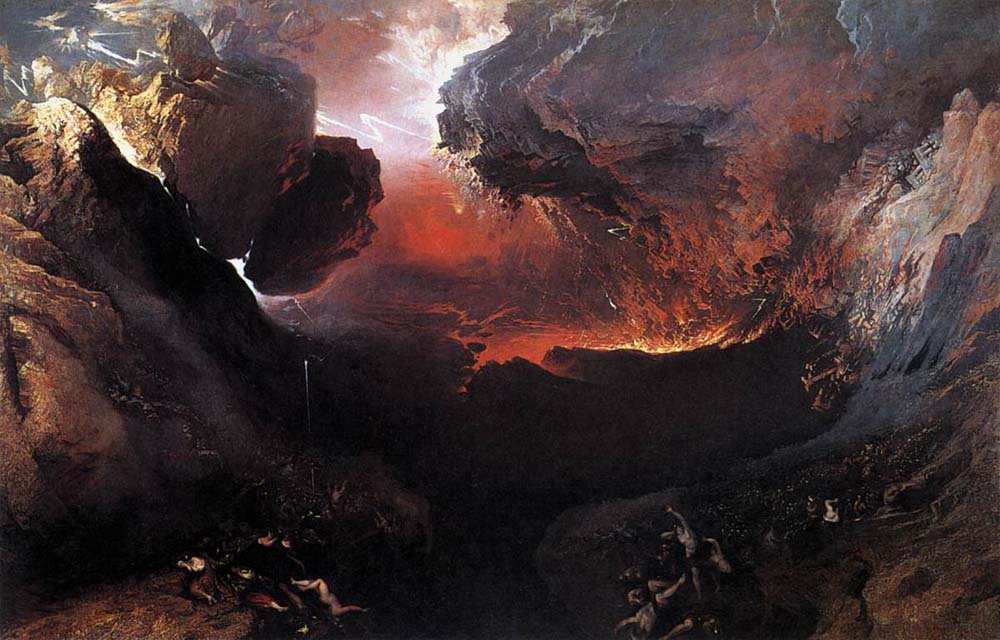 in the days of Noah while the ark was being built.” With this in mind, let me stress five things about this passage:
1. Clearly, Jesus didn’t preach to these “spirits in prison” until after his resurrection and likely before his appearance to his disciples, but certainly before his ascension.
2. The “imprisoned spirits” spoken of in the passage refer to fallen angels or demons that were permanently bound due to their extraordinary vile nature. We observe elsewhere in the Scriptures that unclean spirits resist such an imprisonment (Luke 8:31). Ultimately, they will be cast into the lake of fire as their eternal abode and punishment (Matthew 25:41 & Revelation 20:10).
3. What is this “prison”? Most likely what the New Testament describes as “the abyss,” the furnace-like pit where evil spirits are imprisoned, not human beings. See Luke 8:31, Revelation 9:1-2 and 20:1-3 for verification. As noted in the previous point, the mass of unclean spirits known as Legion begged Jesus not to sentence them to the abyss (Luke 8:31). Jude 6 also refers to this prison for fallen angels.
4. What did Jesus preach to these spirits in prison after his resurrection? Jesus’ resurrection was an incredible moment of victory where Jesus “made a public spectacle of” the powers of darkness, which is illustrative of a Roman general parading his enemies through the streets of Rome (Colossians 2:15 & Ephesians 1:19-22). The Lord no doubt proclaimed this crushing victory to these wicked losers and reminded them of their impending judgment and condemnation to the lake of fire. Think of a football player making an incredible touchdown in a championship game and the ensuing victory celebration, but times it to the nth degree for Jesus Christ’s triumphant resurrection.
5. Verse 20 shows that these unclean spirits have been captive to the abyss since the time of Noah, which coincides with 2 Peter 2:4. They were sentenced to this prison because their wickedness overstepped the parameters of the Sovereign LORD’s tolerance, which helps explain why, after 120 years of Noah’s preaching while building the ark, only seven of his family members believed in the LORD. No one else in the human race could be convinced because of the vile anti-God activity of these spirits (not that this discounts human will, of course). Therefore God bound these wicked spirits in the abyss until their final judgment.
As you can see, 1 Peter 3:18-20 in no way supports the idea that people are conscious in Sheol, including Jesus Christ who spent three days there – dead – until his awesome resurrection and victory over the kingdom of darkness.
1 Peter 4:6
This verse has been known to befuddle people because it causes them to wonder if it’s talking about the gospel being preached to souls in Sheol, which of course implies that souls in Sheol are alive and conscious. Thankfully, the context of the passage clears it up:
Therefore, since Christ suffered in his body, arm yourselves also with the same attitude, because whoever suffers in the body is done with sin. (2)As a result, they do not live the rest of their earthly lives for evil human desires, but rather for the will of God. (3) For you have spent enough time in the past doing what pagans choose to do—living in debauchery, lust, drunkenness, orgies, carousing and detestable idolatry. (4) They are surprised that you do not join them in their reckless, wild living, and they heap abuse on you. (5) But they will have to give account to him who is ready to judge the living and the dead. (6) For this is the reason the gospel was preached even to those who are now dead, so that they might be judged according to human standards in regard to the body, but live according to God in regard to the spirit.
As you can see, the context of the paragraph is the believer being “done with sin” in order to live the rest of his or her earthly life “for the will of God” (verses 1-2). This is the topic of the passage. Verses 3-4 go on to show how unbelievers—”pagans”—are in bondage to the flesh and live in sin as a lifestyle, for which they’ll be judged by God when they stand before Him to give an account of their lives on Judgment Day (verse 5).
This is the context of verse 6, which is obviously talking about the gospel being preached to those who were now dead and not to preaching the gospel to dead souls in Sheol. In other words, the gospel was preached to these people before they died, which enabled them to “not live the rest of their earthly lives for evil human desires, but rather for the will of God” (verse 2). This is, after all, the main purpose of preaching the gospel to people beyond acquiring immortality (2 Timothy 1:10) — the power of the gospel sets them free of the flesh and enables them to “participate in the divine nature” (2 Peter 1:4) via “walking in the spirit.” When believers learn to be spirit-controlled rather than flesh-ruled they are free to “live according to God in regard to the spirit” (verse 6). We see this in passages like Ephesians 4:22-24. This is the thrust of the paragraph—the context—and “Context is King.”
It is presumed by the wording that the people whom Peter was referring to in verse 6 “who are now dead” accepted the gospel and—as spiritually regenerated children of God—were in heaven with the Lord, a topic covered (and proven) next chapter.
How Can Sheol Be a State of Torment if Men seek it During the Tribulation?
Let’s look at an interesting indirect reference to Sheol in Revelation 9. The first part of this chapter has to do with the fifth trumpet judgment during the Tribulation. “Locusts” are released from the Abyss to torment people on the earth who don’t have the seal of God. As noted in a previous section, the “Abyss” is the furnace-like pit where particularly malevolent evil spirits are imprisoned (see Luke 8:31, Revelation 9:1-2 and 20:1-3). As such, we can confidently conclude that the “locusts” are wicked spirits who ![JoelLocust2[1]](https://www.hellhadesafterlife.com/wp-content/uploads/JoelLocust21.jpg) are given the power to torture people for five months, but not to kill:
are given the power to torture people for five months, but not to kill:
[The locusts] were not allowed to kill them but only to torture them for five months. And the agony they suffered was like that of the sting of a scorpion when it strikes. 6 During those days people will seek death but will not find it; they will long to die, but death will elude them.
As you can see, the agony of these stubborn, unrepentant people will be so great that they’ll seek death but it will elude them.
This passage indirectly addresses the nature of Sheol for two reasons: (1.) These unbelievers are seeking death and, if they die, they automatically go to Sheol; and (2.) death and Hades (Sheol) are spoken of in the same breath in Scripture; for instance:
I am the Living One; I was dead, and now look, I am alive for ever and ever! And I hold the keys of death and Hades.
…and there before me was a pale horse! Its rider was named Death, and Hades was following close behind him. They were given power over a fourth of the earth to kill by sword, famine and plague, and by the wild beasts of the earth.
The sea gave up the dead that were in it, and death and Hades gave up the dead that were in them, and each person was judged according to what they had done. 14 Then death and Hades were thrown into the lake of fire. The lake of fire is the second death.
Why is it significant that these horribly tormented people will literally seek death? Because such a statement only makes sense if Sheol is the condition of death where dead souls ‘sleep’ in death. In other words, Revelation 9:6 makes no sense if Sheol were a torture chamber in the heart of the earth where unredeemed souls suffer constant fiery torment until their resurrection. Let’s go ahead and read this verse as if this doctrine were true:
During those days people will seek death [and go to Sheol to suffer constant roasting torment] but will not find it; they will long to die [and be tortured in flames in Sheol], but death will elude them.
As you can see, the idea that Sheol is a condition of constant fiery torment for unredeemed souls doesn’t fit this passage or any other passage in Scripture. It’s a false doctrine that makes utter nonsense of God’s Word. However, when we have a biblical understanding of the nature of Sheol – that it’s the soulish graveyard in the underworld where dead souls “rest” in death – then the passage makes perfect sense. No wonder these people wanted to die.
Now someone might argue that it’s not necessary for these people to know what death actually entails – i.e. suffering constant roasting torture in Sheol. In other words, they’re deceived in thinking that death will offer them relief from the torture of the “locusts” when it will actually bring them worse agony. Supposing this is true, let’s read the passage the way eternal torturists actually interpret it:
During those days people will seek death but will not find it; they will long to die, but death will elude them [little knowing that death will not bring them the non-existence they crave as they will suffer perpetual flaming torment in Hades only to be resurrected on the day of judgment and cast into the lake of fire where they will suffer never-ending roasting torture forever and ever].
Again, the eternal torture belief makes nonsense of the Scriptures.
For further commentary on this topic see Job’s View of Sheol (scroll down)
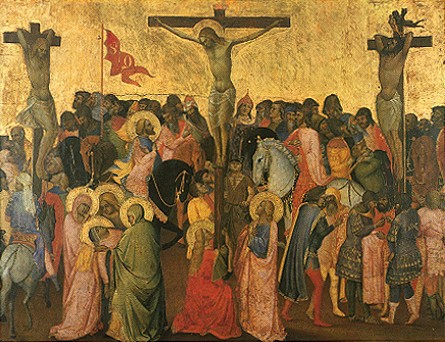
Jesus Christ DIED
A central doctrine of Christianity is that Jesus died for our sins and was raised to life for our justification:
He was delivered over to death for our sins and was raised to life for our justification.
Moreover, the Bible explicitly says that Father God did not spare his Son but delivered him over to death for our sakes:
He who did not spare his own Son, but gave him up for us all—how will he not also, along with him, graciously give us all things?
Jesus himself plainly declared that he was going to be killed:
From that time on Jesus began to explain to his disciples that he must go to Jerusalem and suffer many things at the hands of the elders, the chief priests and the teachers of the law, and that he must be killed and on the third day be raised to life.
My point is that all three passages literally say in one way or another that Jesus died for our sins and two of them that he was raised to life. How can someone be “raised to life” if he didn’t actually die? Stop for a moment and consider that question again: How can someone be “raised to life” if he didn’t actually die? It’s a simple question with a simple and obvious answer.
Amazingly, whole segments of Christendom don’t believe that Jesus really died; they only believe he died physically and then went to Sheol to either roast in torment for three days or hang out with Abraham in some paradise compartment of Sheol and maybe minister to spirits in his spare time. Either way, they don’t really believe he died, nor do they believe he was raised to life since he was already very much alive in Sheol. They only believe he was raised to life bodily.
The Bible, however, refutes this point blank. Both the Old and New Testaments plainly show that Jesus Christ died soulishly as well as physically:
Because He [Jesus] poured out His soul (nephesh) unto death,
And He was numbered with the transgressors,
And He bore the sin of many,
And made intercession for the transgressors.
Isaiah 53:12 (NKJV)
Then he said to them, “My soul (psuche) is overwhelmed with sorrow to the point of death. Stay here and keep watch with me.”
As you can see, the Hebrew and Greek words for “soul” are used in these passages. Jesus “poured out His soul unto death,” not just his body.
To reinforce this, the Bible over and over stresses that Jesus Christ died as our substitutionary death. In fact, it’s often hard to get through one chapter of the New Testament without reading some reference to Jesus dying for our sins, as well as being raised to life. Let’s look at a smattering of examples from the epistle of Romans:
and who through the Spirit of holiness was appointed the Son of God in power by his resurrection from the dead: Jesus Christ our Lord
But God demonstrates his own love for us in this: While we were still sinners, Christ died for us.
For if, while we were God’s enemies, we were reconciled to him through the death of his Son, how much more, having been reconciled, shall we be saved through his life!
Or don’t you know that all of us who were baptized into Christ Jesus were baptized into his death? 4 We were therefore buried with him through baptism into death in order that, just as Christ was raised from the dead through the glory of the Father, we too may live a new life.
5 For if we have been united with him in a death like his, we will certainly also be united with him in a resurrection like his. 6 For we know that our old self was crucified with him so that the body ruled by sin might be done away with, that we should no longer be slaves to sin— 7 because anyone who has died has been set free from sin.
8 Now if we died with Christ, we believe that we will also live with him. 9 For we know that since Christ was raised from the dead, he cannot die again; death no longer has mastery over him. 10 The death he died, he died to sin once for all; but the life he lives, he lives to God.
And if the Spirit of him who raised Jesus from the dead is living in you, he who raised Christ from the dead will also give life to your mortal bodies because of his Spirit who lives in you.
34 Who then is the one who condemns? No one. Christ Jesus who died—more than that, who was raised to life—is at the right hand of God and is also interceding for us.
For this very reason, Christ died and returned to life so that he might be the Lord of both the dead and the living.
If your brother or sister is distressed because of what you eat, you are no longer acting in love. Do not by your eating destroy someone for whom Christ died.
This is just one book of the New Testament and I’m skipping examples.
Here are more examples from other New Testament books:
As they were coming down the mountain, Jesus instructed them, “Don’t tell anyone what you have seen, until the Son of Man has been raised from the dead.”
When they came together in Galilee, he said to them, “The Son of Man is going to be delivered into the hands of men. 23 They will kill him, and on the third day he will be raised to life.” And the disciples were filled with grief.
“We are going up to Jerusalem, and the Son of Man will be delivered over to the chief priests and the teachers of the law. They will condemn him to death 19 and will hand him over to the Gentiles to be mocked and flogged and crucified. On the third day he will be raised to life!”
As they were coming down the mountain, Jesus gave them orders not to tell anyone what they had seen until the Son of Man had risen from the dead.
“We are going up to Jerusalem,” he said, “and the Son of Man will be delivered over to the chief priests and the teachers of the law. They will condemn him to death and will hand him over to the Gentiles, 34 who will mock him and spit on him, flog him and kill him. Three days later he will rise.”
For even the Son of Man did not come to be served, but to serve, and to give his life as a ransom for many.”
Now may the God of peace, who through the blood of the eternal covenant brought back from the dead our Lord Jesus, that great Shepherd of the sheep,
Praise be to the God and Father of our Lord Jesus Christ! In his great mercy he has given us new birth into a living hope through the resurrection of Jesus Christ from the dead,
Through him you believe in God, who raised him from the dead and glorified him, and so your faith and hope are in God.
“I am the Living One; I was dead, and now look, I am alive for ever and ever! And I hold the keys of death and Hades.”
“To the angel of the church in Smyrna write:
These are the words of him who is the First and the Last, who died and came to life again.”
The person speaking in these last two verses is Jesus Christ Himself — “The Truth” (John 14:6). Notice that he plainly testifies that he died, but is now alive forever. No where does he say that he only physically died, but was fully conscious in either bliss or torments in Sheol. No, he plainly declares that he died and came to life again!
This is just a quick smattering of these types of passages. You’ll find such statements in most of the books of the New Testament and, again, often every chapter. If 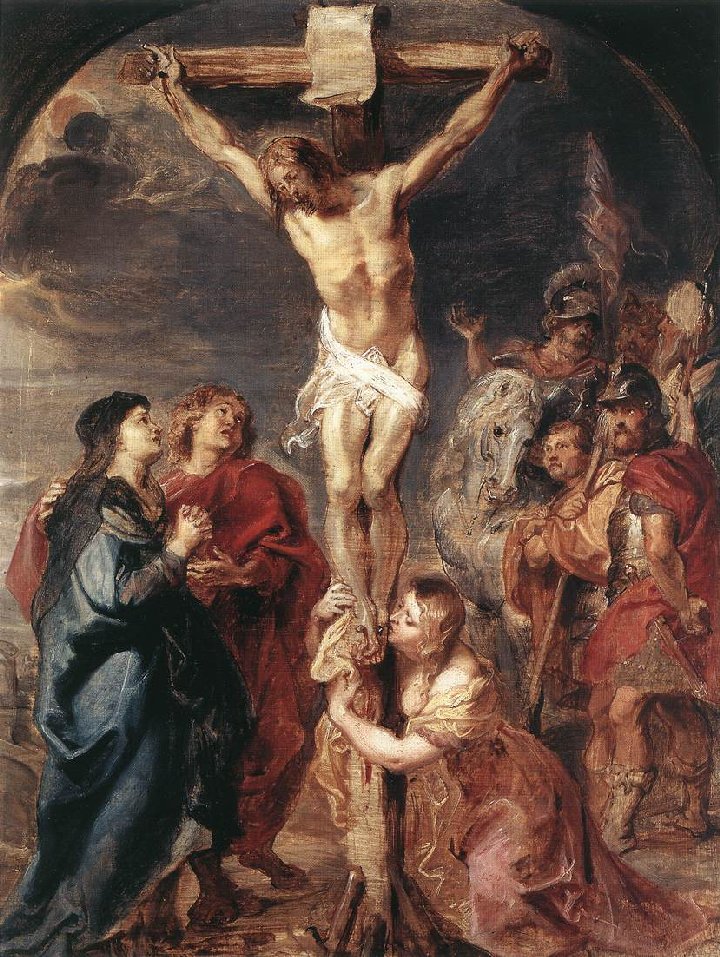 words mean anything at all we have to conclude that Jesus Christ literally died for our sins and was raised to life for our justification. This is a central truth of Christianity.
Yet adherents of eternal torture don’t believe this; they only believe Jesus died physically and then ministered to spirits in subterranean prisons for three days or hanged out with father Abraham or was tortured in flames. Whatever the case, they don’t believe he really died; and they don’t believe he was raised to life either because they don’t actually believe he died.
True Christianity, however, is rooted in the fact that Jesus Christ, the Son of God, gave up his deity to become a human being and became “obedient to death”:
In your relationships with one another, have the same mindset as Christ Jesus:
6 Who, being in very nature God,
did not consider equality with God something to be used to his own advantage;
7 rather, he made himself nothing
by taking the very nature of a servant,
being made in human likeness.
8 And being found in appearance as a man,
he humbled himself
by becoming obedient to death—
even death on a cross!
Jesus Christ literally died for our sins and was raised to life for our justification. When he was crucified he “gave up his spirit” (John 19:30) and the breath of life returned to the Father in heaven while Jesus’ dead soul was laid to rest in Sheol—the “the assembly of the dead,” as Proverbs 21:16 defines it—the graveyard of souls in the heart of the earth.
Think about that for a moment because it’s a mind-blowing statement: One part of the Godhead (Father, Son & Holy Spirit) DIED for you and me so that we may be reconciled to the Creator and have eternal life—God DIED. How could God possibly die, that is, cease to exist for three days? I don’t know, but that’s precisely what happened: The Alpha and Omega, the Beginning and the End, became “obedient to death” and ceased to exist for three days; and was raised to life so that we may be justified and inherit eternal life.
What an incredible price to pay; it’s awe-inspiring!
Pat Robertson (whom I love) objected to the idea that Jesus died completely by adamantly insisting that Jesus was God and if Christ wholly died—not just his body—the universe would fall apart (Robertson 72). While it’s true that if the Creator died—that is, Father, Son and Holy Spirit—the universe would certainly perish with its Creator, Jesus is one part of the Godhead, not all three (Matthew 28:19). So, whereas Jesus is God and Jesus died completely for three days, the Father and Holy Spirit did not. As such, the Father and Holy Spirit naturally made up for the loss of the Son for three days. It’s like if my wife, Carol, goes on a trip for three days, I’d have to cover for her in the home and the ministry. If I can cover for my wife for three days why wouldn’t the Father and Holy Spirit be able to do the same for the Son? This in no way diminishes the worth of my wife or the Messiah. I consider my wife invaluable, how much more so the King of kings?
One last point before moving on: We’ve gone over numerous passages in this section that show how Jesus died for our sins and was resurrected three days later. Isn’t it interesting that there’s absolutely no mention of Jesus being alive & conscious in Sheol, whether in blissful comfort with Abraham or in roasting agony? If either were true, don’t you think God would mention it somewhere in his Word, particularly these passages that address the issue? It’s not like it’s an insignificant detail! And yet there’s mysteriously no mention of either in any of these passages. Why not? Because Jesus’ soul was literally dead in Sheol for three days. There’s no getting around it, the idea that Sheol is a place of conscious existence is a false doctrine that’s utterly foreign to the Scriptures.
Hades in the Book of Revelation
The Greek word for Sheol – Hades – appears four times in the book of Revelation. Here’s the first time:
When I saw him [Jesus Christ], I fell at his feet as though dead. Then he placed his right hand on me and said: “Do not be afraid. I am the First and the Last. 18 I am the Living One; I was dead, and now look, I am alive for ever and ever! And I hold the keys of death and Hades.”
The context of this passage is the vision John received as a prisoner on the island of Patmos when he was about 95 years old (!). In this vision John sees Jesus Christ and falls “at his feet as though dead,” which might be a reference to the “slain in the Spirit” phenomenon. The Lord proceeds to comfort him by touching him and encouraging him not to be afraid because Jesus is the beginning and the ending of history and, in fact, the meaning of history (it is, after all, His-story).
![66rev2213alphaomega[1]](https://www.hellhadesafterlife.com/wp-content/uploads/66rev2213alphaomega1.jpg) Jesus goes on to point out that he died, but now he is alive forever and ever. This corroborates what was established in the previous section: Jesus Christ literally died for humanity; he suffered the wages of sin – DEATH – so that we don’t have to. Religion has been lying about this for centuries, saying that he only died physically. Who are you going to believe, religion or Jesus Christ?
Jesus goes on to point out that he died, but now he is alive forever and ever. This corroborates what was established in the previous section: Jesus Christ literally died for humanity; he suffered the wages of sin – DEATH – so that we don’t have to. Religion has been lying about this for centuries, saying that he only died physically. Who are you going to believe, religion or Jesus Christ?
The Messiah then goes on to say that he holds the keys to death and Hades. What does this mean? Keys signify control or authority. If you own the keys to a facility you control who comes in or leaves. Jesus holds the keys to death and Hades. As we’ve seen over and over in this study, death and Hades go hand-in-hand because when unregenerated people physically die and their bodies go to the grave (or whatever the case) their dead souls automatically go to Sheol, which is . Death and Hades go hand-in-hand, which explains the next appearance of Hades in Revelation:
And behold, a pale horse, and he who sat on it, his name was Death. Hades followed with him. Authority over one fourth of the earth, to kill with the sword, with famine, with death, and by the wild animals of the earth was given to him.
The passage refers to the fourth seal judgment, which involves the fourth horseman of the apocalypse, which is death. Why is this fourth horseman death itself? Because, as you can see, this massive judgment entails the death of one quarter of the people on earth (!). This is why Hades follows after death because those who die go to Hades to “rest” in death until their resurrection, which takes place on judgment day, as shown here:
Then I saw a great white throne and him who was seated on it. The earth and the heavens fled from his presence, and there was no place for them. 12 And I saw the dead, great and small, standing before the throne, and books were opened. Another book was opened, which is the book of life. The dead were judged according to what they had done as recorded in the books. 13 The sea gave up the dead that were in it, and death and Hades gave up the dead that were in them, and each person was judged according to what they had done. 14 Then death and Hades were thrown into the lake of fire. The lake of fire is the second death. 15 Anyone whose name was not found written in the book of life was thrown into the lake of fire.
![AJ-FOTF[1]](https://www.hellhadesafterlife.com/wp-content/uploads/AJ-FOTF1.jpg)
As you can see, dead souls in Sheol are resurrected, as are their dead bodies from the earth and sea, and they are judged according to what they had done; if their names are not found written in the book of life they will be cast into the lake of fire, which is called “the second death” where Jesus said God would “destroy both soul and body” (Matthew 10:28). We address the details of this judgment in Chapter Eight of HELL KNOW.
With this in mind, let’s go back to Jesus’ statement in the first chapter of Revelation:
“I am the Living One; I was dead, and now look, I am alive for ever and ever! And I hold the keys of death and Hades.”
Because of Jesus’ miraculous triumph over death he holds the keys to death and Hades (Sheol) and therefore is in control of the eternal destiny of the bodies (death) and souls (Hades) of every unredeemed person who has ever existed.
Now let’s revisit the final two verses of chapter 20:
Then death and Hades were thrown into the lake of fire. The lake of fire is the second death. 15 Anyone whose name was not found written in the book of life was thrown into the lake of fire.
What does it mean that death and Hades are to be thrown into the lake of fire, which is the second death? It refers to one of two things or, more likely, both: 1. Since Jesus holds![burning_fire[1]](https://www.hellhadesafterlife.com/wp-content/uploads/burning_fire1.jpg) the keys to death and Hades he therefore has control over the bodies and souls of the unregenerated. Those whose names are not found in the book of life will be cast into the lake of fire to suffer the second death; as such, death and Hades being cast into the lake of fire refers to the bodies (death) and souls (Hades) of the unredeemed who will suffer literal “everlasting destruction,” as Paul described it in 2 Thessalonians 1:9. 2. It also refers to the fact that “there will be no more death” in the eternal age of the new heavens and new earth as stated five verses later in Revelation 21:4. Since there will be no more death in the coming eternal age, death itself is cast into the lake of fire as is its counterpart Hades (Sheol). After all, if there’s no death there’s no need for Sheol either. In other words, they both cease to exist, just like the bodies and souls of the unrighteous who are cast into the lake of fire; that is, after a period of conscious suffering as divine justice dictates, which is covered in HELL KNOW Chapter Three.
the keys to death and Hades he therefore has control over the bodies and souls of the unregenerated. Those whose names are not found in the book of life will be cast into the lake of fire to suffer the second death; as such, death and Hades being cast into the lake of fire refers to the bodies (death) and souls (Hades) of the unredeemed who will suffer literal “everlasting destruction,” as Paul described it in 2 Thessalonians 1:9. 2. It also refers to the fact that “there will be no more death” in the eternal age of the new heavens and new earth as stated five verses later in Revelation 21:4. Since there will be no more death in the coming eternal age, death itself is cast into the lake of fire as is its counterpart Hades (Sheol). After all, if there’s no death there’s no need for Sheol either. In other words, they both cease to exist, just like the bodies and souls of the unrighteous who are cast into the lake of fire; that is, after a period of conscious suffering as divine justice dictates, which is covered in HELL KNOW Chapter Three.
“The rest of the dead did not come to life until the thousand years were ended”
Let’s look at one more passage from Revelation that reveals the nature of Sheol:
I saw thrones on which were seated those who had been given authority to judge. And I saw the souls of those who had been beheaded because of their testimony about Jesus and because of the word of God. They had not worshiped the beast or its image and had not received its mark on their foreheads or their hands. They came to life and reigned with Christ a thousand years. 5 (The rest of the dead did not come to life until the thousand years were ended.) This is the first resurrection. 6 Blessed and holy are those who share in the first resurrection. The second death has no power over them, but they will be priests of God and of Christ and will reign with him for a thousand years.
In his vision, John describes what he sees in Heaven and says he “saw the souls of those who had been beheaded because of their testimony” during the tribulation. These righteous souls are in heaven and the latter part of verse 4 says “they came to life and reigned with Christ a thousand years,” referring to the Millennium, the 1000-year reign of Christ. This resurrection is referred to as the “first resurrection” in verses 5-6. Some argue that the phrase “they came to life and reigned with Christ a thousand years” suggests that these righteous souls were fully dead — that is, in Sheol — but this can’t be since, again, the first part of verse 4 plainly shows these souls in heaven after being martyred during the Tribulation on earth, just like the martyrs in Revelation 7:9-17 and Revelation 6:9-11. Remember the hermeneutical rules: “Context is king” and “Scripture interprets Scripture.” With this understanding, here’s what verse 4 is saying: “they came to life [physically] and reigned with Christ a thousand years.” You see? The addition of one simple word perfectly clarifies the statement and settles the matter.
So this passage is addressing the “first resurrection,” which in this case is the third stage of the resurrection of the righteous (the first stage took place when Jesus was resurrected as the “firstfruits” and the second stage takes place at the time of the Rapture, as shown in 1 Thessalonians 4:13-18), but notice the parenthetical reference to unredeemed souls in Sheol at the beginning of verse 5:
(The rest of the dead did not come to life until the thousand years were ended.)
“The rest of the dead” is referring to all unredeemed souls laid to rest in Sheol throughout the course of human history. They “did not come to life” until after the Millennium, which is when the great white throne judgment takes place, which we addressed in the previous section. If they “did not come to life” until their Judgment Day then this obviously means that they will be dead until then. In other words, they are in Sheol — the world of the dead — where dead souls ‘sleep’ in death until their resurrection.
Now, someone might argue that the reference to righteous martyrs coming to life at the end of verse 4 refers specifically to a bodily resurrection since the first part of the verse shows their souls alive in heaven; therefore, they argue, the reference to unredeemed people coming to life on judgment day would also refer only to a bodily resurrection. This argument must be rejected on the grounds that, although this passage reveals redeemed souls in heaven before their bodily resurrection, it doesn’t show anything about the nature of unredeemed souls in Sheol before their resurrection on Judgment Day. In fact, all it says is that they “did not come to life” until the thousand years were ended,” which shows that they were dead until then, dead in Sheol. Since this passage says nothing more on the nature of Sheol than what is implied by this statement we have to look to the rest of Scripture to ascertain what it’s like for souls in Sheol; and the rest of this study plainly shows that souls in Sheol are dead, ‘resting’ in death until their resurrection.
We’ll address the issue of the believer’s intermediate state between death and resurrection next chapter.
What about People who Claim to have Visited Sheol Literally or in a Vision?
This question applies to books like Bill Wiese’ 23 Minutes in Hell (2006) and Mary K. Baxter’s A Divine Revelation of Hell (1993), both claiming to have gone to Sheol (Hades) in visions. I’ve read another minister’s testimony that he went to Sheol in a vision as well. There are others with similar assertions.
The claim of these people is that they were given these visions in order to be used of God to evangelize the lost by utilizing the horrors of a torture chamber in the heart of the earth as a big club to convince people to repent. In other words, they believe they’re end-time agents of God on an evangelizing mission.
While evangelization and genuine repentance are always good, these people’s supernatural experiences beg the question: Why did the LORD wait almost 2000 years after the biblical canon was completed to reveal these insanely horrifying details about Sheol? If their visions (or experiences) are to be believed, why aren’t there similar such descriptions of Sheol in the Bible, the Word of God?
I’ve never read Wiese’s book and don’t need to because a thorough study of God’s Word informs us everything we need to know about the nature of Sheol, as this book testifies.
I did, however, read Baxter’s book and was sickened by its unscriptural portrayal of the topic. Ms. Baxter cites a number of passages at the end of her book to support her hideous visions, including Matthew 10:28. There are two problems with citing this verse:
![59356_w185[1]](https://www.hellhadesafterlife.com/wp-content/uploads/59356_w1851.png)
![ADivineRevelationOfHellMaryKBaxter[1]](https://www.hellhadesafterlife.com/wp-content/uploads/ADivineRevelationOfHellMaryKBaxter1.jpg)
1. Jesus was referring to Gehenna in this passage, which is the Greek word often translated as “hell” in English Bibles; and Gehenna literally refers to the Valley of Hinnom, a trash dump/incinerator located outside the southwest walls of Jerusalem (this is covered in detail in HELL KNOW here). Why would Jesus use this perpetually smoking trash dump to illustrate the lake of fire or second death? Because it was something all his listeners knew about and his message was therefore clear: Those who are God’s enemies will be discarded like trash and eradicated just like garbage cast into Gehenna, the Valley of Hinnom. 2. Gehenna (the lake of fire) and Sheol (Hades) are two completely separate places. In fact, souls in Hades will be resurrected from Hades and – if their names aren’t found in the book of life – will be cast into the lake of fire, as will Hades itself, as shown in Revelation 20:11-15 (covered above).
Both of these points reveal the obvious problem with Baxter citing Matthew 10:28 to support her creative vision: The passage applies to the lake of fire and not to Sheol and, furthermore, refers to literal destruction of soul and body and not never-ending roasting torment. Evidently Ms. Baxter doesn’t even realize that there’s a difference between Sheol (Hades) and Gehenna, the lake of fire. Do you think it’s wise to give credence to the visions of a person who doesn’t even understand the fundamental aspects of her topic?
The bottom line is that we don’t need the visions or testimonies of these types of people to understand the nature of Sheol because everything God wants us to know about Sheol has already been revealed in his Word. This is in line with Paul’s doctrinal rule: “Do not go beyond what is written” (1 Corinthians 4:6), which explains why this book focuses exclusively on what God’s Word says on the subject from Genesis to Revelation and not the dubious testimonies of people who claim to have visions or experiences that just so happen to wholly disagree with what God’s Word teaches.
I call this tendency to formulate vital doctrine based on dubious visions/experiences the “Eliphaz syndrome.” If you’re not familiar with Eliphaz, he was one of Job’s three “friends” whom the LORD accused of folly in what they said to their suffering friend (Job 42:7-8). Eliphaz was the one who made claims based on mysterious visions/experiences (Job 4:12-21). We can extend mercy to Eliphaz since there wasn’t much—if any—Scripture for him to rely on back then, but modern-day believers have ready access to the entire canon of God’s Word for the purpose of determining proper doctrine and correcting false doctrine (2 Timothy 3:16-17). So we have no excuse.
Near Death Experiences and Ghostly Phenomena
What about “near-death experiences”—NDEs—where people who claim to have died either “see the light” of heaven or suffer torments in some hellish torture chamber or some variation of either? NDEs can be chalked up to one of four things:
- Activity of the mind after temporarily dying, i.e. dreams, imaginations.
- The person had a real after-death experience. This could be a child or spiritually regenerated person, like the kid in the book Heaven is Real, or an unbeliever whose soul and breath of life haven’t separated yet (I’m not saying that this actually happens; I’m just listing it as a possibility for the sake of argument).
- We cannot discount what the Bible calls deceiving spirits.
- Another possibility is that the person is lying.
As for apparitions/ghosts, they could be one of four things:
- Flashes from the past; that is, picking up residual images of former events.
- Demonic activity.
- A person who has delayed entry to heaven or Sheol for whatever reason. In the event of a delayed entry to Sheol—if indeed such a thing even occurs (again, I’m just listing this as a possibility for the sake of argument)—the soul and breath of life obviously didn’t separate at the point of physical death for some reason (keeping in mind that it’s the spirit of life that gives consciousness to the mind). As such, the person would be temporarily stuck on this plane in a disembodied state. For details see the article on Human Nature at the Fountain of life site or the Appendix of the unabridged version of SHEOL KNOW.
As above, the person may be lying.
This covers the spectrum of possibilities, although I’m sure there are minor or mixed variants. Even if one discovers evidence that most cases can be pinpointed to one 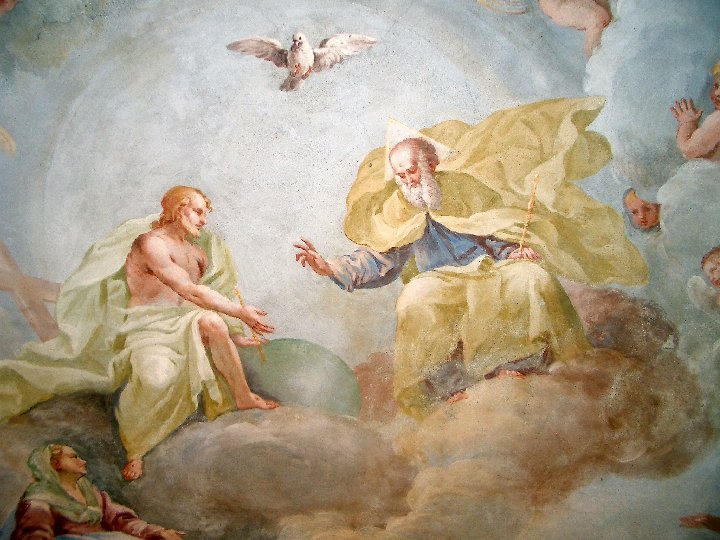 reason, that doesn’t discount that some cases can be attributed to others. I think it’s pointless and possibly even unhealthy to pursue the topic further since the Torah expressly forbids contact with the dead (e.g. Deuteronomy 18:9-14) and therefore people who are overly interested with the subject are treading the borders. As noted in the previous section, Paul gave a rule in the New Testament: “Do not go beyond what is written” (1 Corinthians 4:6). So, with subjects like this, my advice is to stay within the wise parameters of God’s Word.
The main problems with NDEs are:
- These people didn’t actually die in the truest sense, despite what they say, since—if they were dead—they wouldn’t be here, which is why these experiences are called near-death experiences.
- We all know the crazy imaginations that the mind can come up with practically every night when we sleep, how much more so when we almost die or die for a brief time? Since this is so, how can we trust these stories as anything more concrete than dreams or nightmares? Even if many of them agree, too many of them contradict; so we can’t trust them.
- We can’t discount lying spirits. After all, the devil is the “god of this world” and his spiritual minions carry out his orders. He’s the “father of lies” and is fittingly called “the deceiver” in Scripture. Consequently, his modus operandi is to deceive.
In light of all this, if you were the devil wouldn’t you want spiritually un-regenerate people to think they have an immortal soul apart from Christ and that they’ll automatically see a bright light and feeling of warm love when they die, being ushered into heavenly bliss? Of course you would. Why? Because it would steer them away from the gospel, repentance, spiritual rebirth and their Creator.
Another thing to keep in mind is that the vast majority of people who have near-death experiences say they experienced nothing and said their resuscitation was like waking up from a deep sleep. Gee, why didn’t they experience fiery torment?
Lastly, isn’t it a little suspicious that advocates of unceasing roasting torture have to go outside the God-breathed Scriptures to acquire support for their dubious understanding of Sheol? If this doctrine were truly biblically-based—as they claim it is—they wouldn’t have to do this.
For these reasons it’s wise to stick with what God’s Word says on the subject and not go beyond it.
The Believer’s Intermediate State between Physical Death and Bodily Resurrection
This topic is covered in Chapter Ten which is not included in this web-version of SHEOL KNOW, but you can read it here where we look at what the Bible says about the believer’s intermediate state between physical death and bodily resurrection and observe plain evidence that the souls of believers do not die—that is, go to Sheol—because they’re born-again of the imperishable seed (sperm) of Christ by the power of the Holy Spirit. As such, death—Sheol—holds no power over believers and they consequently go straight to be with the Lord in heaven to serve and await their bodily resurrection, which takes place at the Lord’s return for his Church, i.e. the Rapture (covered in the next chapter, just click the link below).
The fact that believers are alive in heaven in a disembodied state awaiting their bodily resurrection is so blatantly detailed in the New Testament that it’s baffling some people argue otherwise. This just goes to show the power of tradition and denominational bias—they override plain Scripture when there’s a contradiction, no matter how obvious the truth.










Shinya
Some have suggested that the prseence of Moses and Elijah represents the testimony of the Law and the Prophets to Jesus identity and his fulfillment of the entirety of the OT hope.I would also note that Matthew bends over backwards to distinguish Jesus from Moses and Elijah when he states that after the disicples look up from falling to the ground they see no one except Jesus Himself alone (NAS, trying to capture the emphatic nature of the Greek). Jesus is not merely on par with Moses and Elijah, but as the Beloved Son he is superior!